
Water risk in mining is no longer simply a technical or site-level compliance issue. It can affect workforce health, operational continuity, infrastructure, regulatory confidence, reputation and enterprise value. The challenge for mining leaders is therefore not only to demonstrate that water met a standard at a particular point in time, but to understand whether risk is visible, governed and controlled across the whole water system.
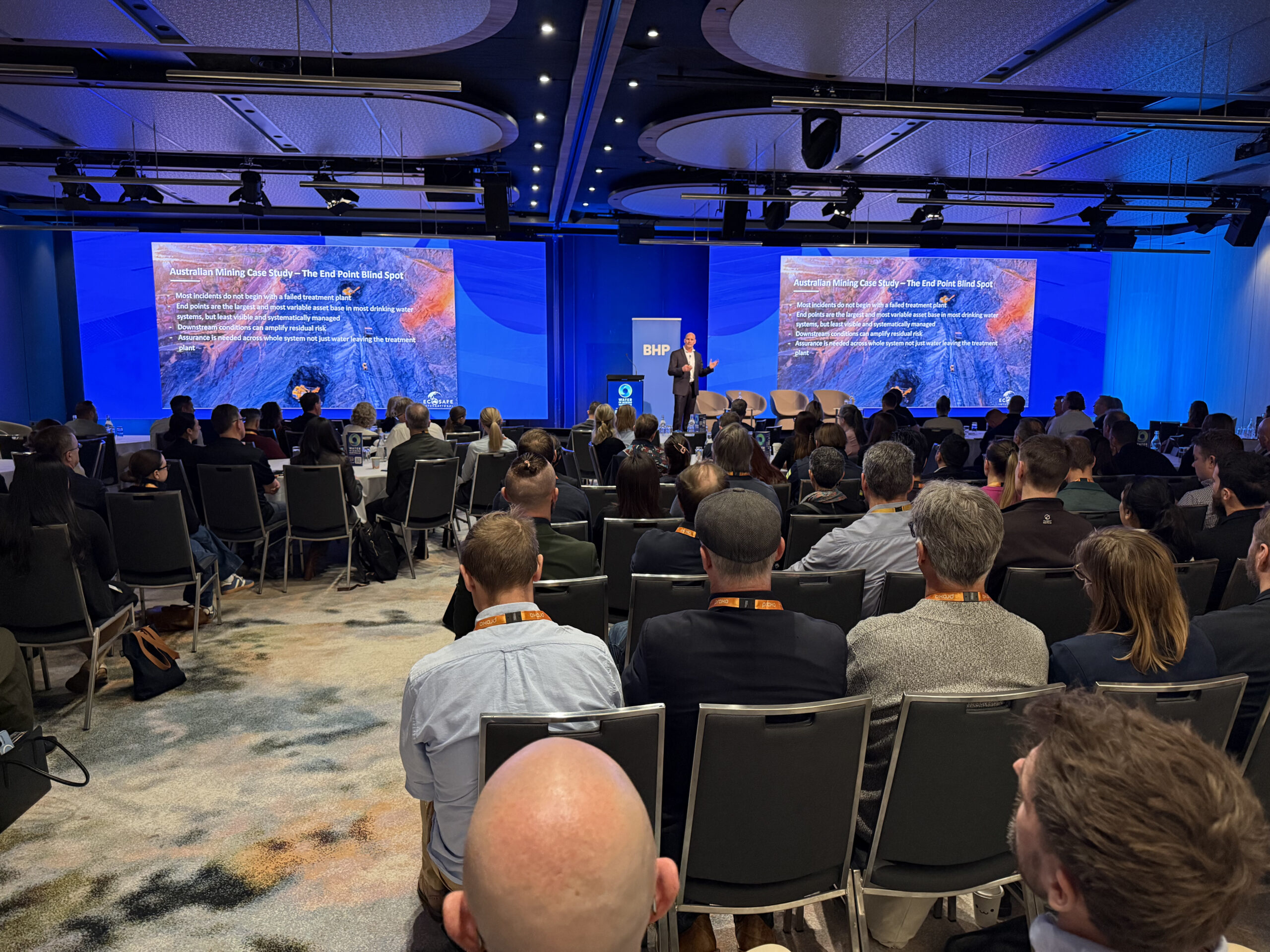
That was the central message shared by Ryan Milne, Founder of Ecosafe International, at Water in Mining Australia 2026 in Perth, where his presentation, Owning The Water Journey: From System Risk to End-Point Assurance, explored how mining organisations can move from reactive compliance toward greater water certainty, resilience and stewardship.
Why water risk needs to be viewed differently
Australian mining operates in complex environments. Remote assets, harsh conditions and mobile workforces increase variability across water systems, while regulation, emerging contaminants, ESG commitments and stakeholder scrutiny continue to raise expectations.
Against that backdrop, a project-by-project or compliance-only approach can leave material risks hidden. Every mine may face a different water challenge, but every mine needs a structured way to make its own water risk visible, material and governable.
Two questions help expose the issue quickly:
Is water recognised on the corporate risk register?
|
These questions move the conversation beyond water quality as a technical metric. Safe and reliable water supports people, continuity of operations and asset performance, while poor outcomes can create regulatory, reputational and enterprise-level consequences.
The end-point blind spot
One of the most important lessons from Ryan’s presentation was that many water safety incidents do not begin with a failed treatment plant.
Treatment can be operating as intended while residual risk develops downstream. End points are often among the largest and most variable asset groups within drinking water systems, yet they can also be among the least visible and least systematically controlled.
This creates an assurance gap. It is not enough to know that water left the treatment plant compliant. The organisation needs confidence that the whole system remains controlled where water is actually consumed.
Monitoring tells us whether controls appear to be working. Controls protect people. |
A mining case study: when compliant treatment was not the whole story
Ryan illustrated the issue through a recent Australian mining example involving persistent out-of-spec water quality results and growing concern about potential health and operational impacts.
The treatment plant was operating and chlorine dosing was in place, but a deeper review identified broader gaps: insufficient free residual chlorine at end points, limited system integrity checks, gaps in flushing and residual management, no established incident response plan, uncertainty around the sampling programme and interpretation of results, no current risk assessment, and an incomplete understanding of how water moved through the system.
The immediate problem was the poor results. The larger problem was the lack of certainty needed to make confident decisions.
The response therefore focused on the shortest credible route back to confidence: field verification across the site and end points, flushing and appropriate residual testing, independent site inspection, retesting, and the beginning of a broader risk-based pathway covering assessment, incident response, sampling and system management.
Rather than chasing isolated results, the operation began establishing a clearer picture of the whole system and a defensible pathway forward. The broader lesson is that operational continuity depends on visible ownership, credible controls, contingency and evidence.
Why sampling alone is not water certainty
Water sampling remains an important part of verification, but verification is not the same as control.
When organisations focus primarily on test results, they risk responding to symptoms without understanding the conditions that created them. Effective water risk management requires a broader view of the hierarchy of controls: risk assessment, maintenance regimes, operational and process controls, training, procedures and verification all have a role.
The objective is not more activity for its own sake. It is better decision-making: understanding where material exposure sits and directing attention and investment toward the controls that provide the greatest leverage for risk reduction, resilience and stakeholder confidence.
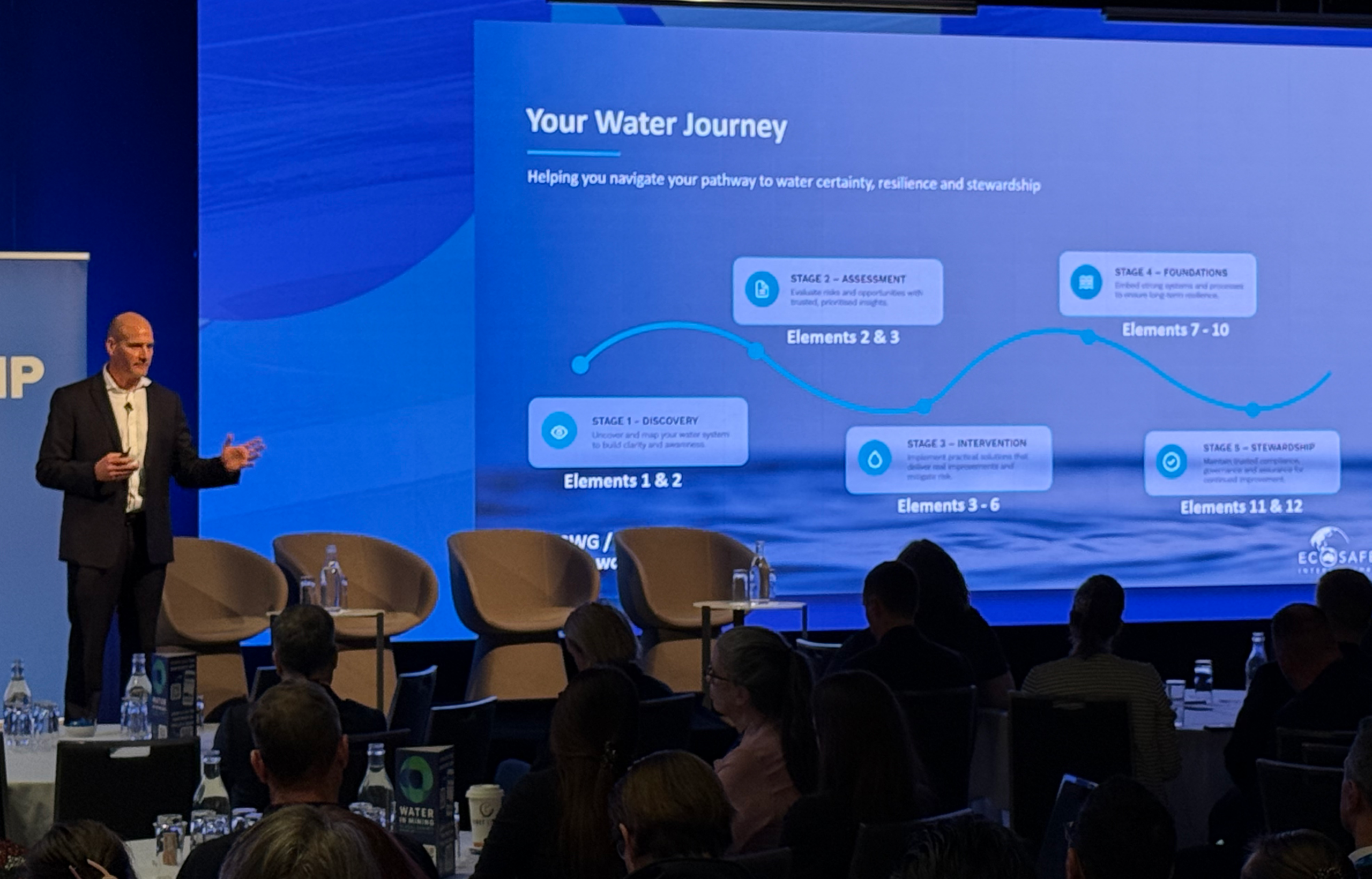
From reactive compliance to a Water Journey™
Ecosafe’s Water Journey provides a structured roadmap for moving from fragmented or reactive water management toward visibility, governance, resilience and stewardship.
It is not a single project, report or collection of documents. It is a pathway that helps an organisation understand its current position, identify the risks and opportunities that matter most, implement practical controls, build strong foundations and maintain assurance over time.
The five stages are:
- Discovery – uncover and map the water system to build clarity and awareness.
- Assessment – evaluate risks and opportunities and develop a prioritised risk picture.
- Intervention – implement practical solutions that mitigate risk and deliver measurable improvement.
- Foundations – embed the systems, processes, accountabilities and capability required for long-term resilience.
- Stewardship – maintain trusted compliance, governance and assurance while driving continual improvement.
A plan does not remove every risk. It makes the next decision visible, prioritised and defensible. |
Water certainty is therefore not delivered through one project. It is built through a sequenced and defensible plan that allows an organisation to move from its current state toward a controlled future state with clarity.
What does good water governance look like in practice?
Strong water governance connects technical work with ownership, decision-making and evidence. That means understanding the whole source-to-end-point system, knowing where critical controls sit, defining ownership and handover points, preparing clear incident response triggers and escalation pathways, and ensuring that water decisions are informed and challenged by appropriate expertise.
The middle of an incident is not the time to decide who owns the response. Clear roles, agreed actions and escalation pathways help teams act early, consistently and with confidence.
For mining organisations, the goal is not to eliminate uncertainty entirely. It is to create enough visibility, control and evidence to make the next decision confidently and demonstrate a credible pathway to regulators, stakeholders, leadership teams and the workforce.
Preparing for the next water challenge
The future of water leadership will increasingly depend on an organisation’s ability to anticipate change rather than simply respond to incidents. Regulatory expectations, microbial health-based targets, emerging contaminants and changing guidance all reinforce the need for water management systems that can adapt.
A mature Water Journey allows organisations to understand where they are today, identify the gap between their current position and future expectations, and prioritise investment accordingly.
For leaders, the starting point can be surprisingly simple:
Where are you on your Water Journey?
|
Continuing the conversation
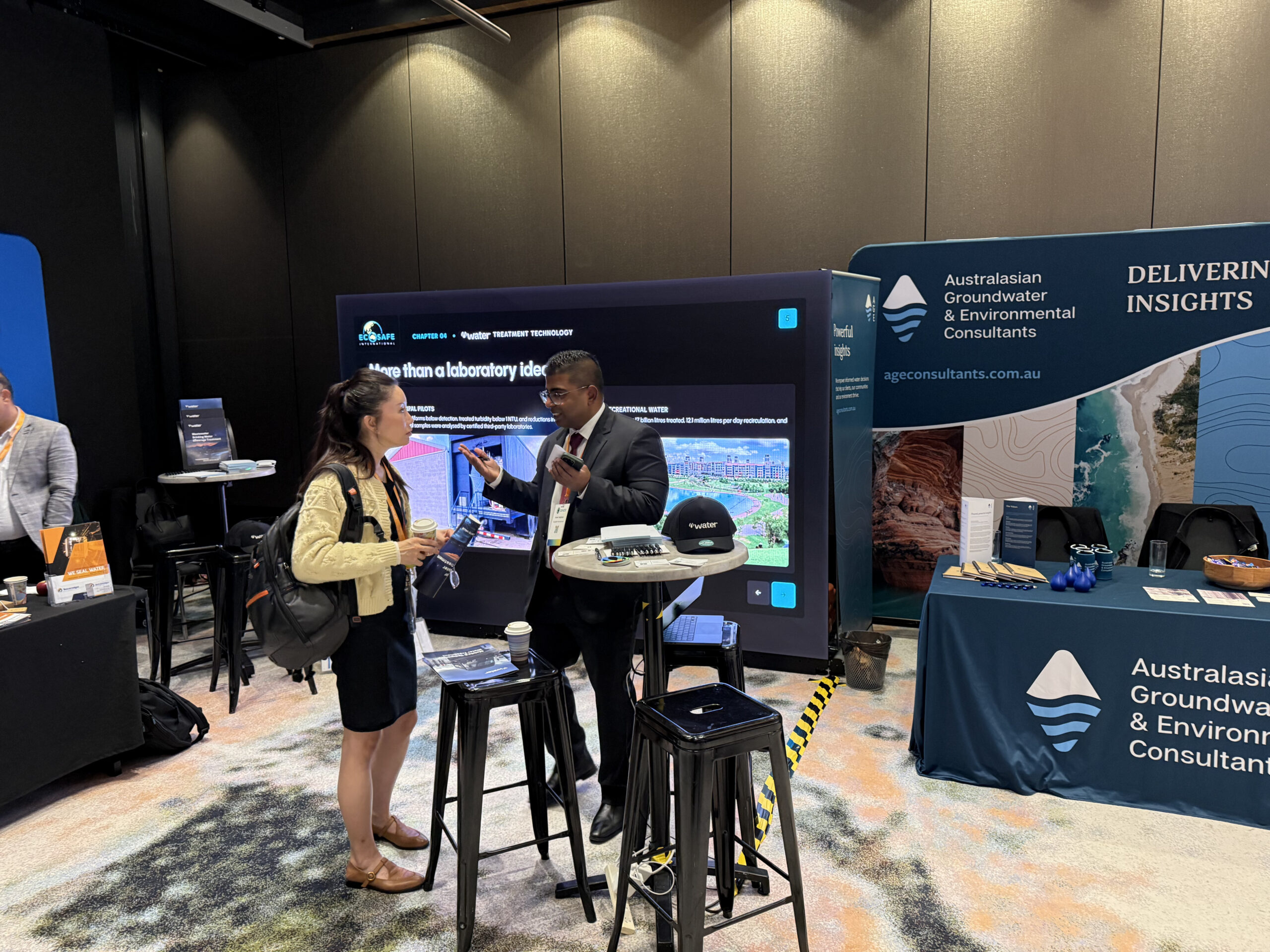
Ryan’s session at Water in Mining Australia 2026 formed part of a broader industry conversation about moving water from a background operational issue to a visible and governable business priority.
For Ecosafe International, owning the Water Journey means helping organisations build clarity around the whole system, focus investment on the risks that matter most and progressively strengthen the controls, governance and assurance required for greater water certainty, resilience and stewardship.
To discuss your organisation’s Water Journey or explore how Ecosafe can support water risk, governance and assurance across mining operations, contact the Ecosafe International team.